Emmys 2026: Apple takes the night, comedy is no longer comedy and Colbert bows out with a prize
Fourteen statuettes for a horror series competing as a comedy, an actor winning two categories on the same night, a cancelled show going home with an award and the lowest audience in the history of the ceremony. The 78th Emmys, held on 14 September at the Peacock Theater in Los Angeles, drew a fairly clear map of where American television is heading: to the platforms, to new shows, and to a public that no longer watches award shows.
14
25
8
28
5.9M

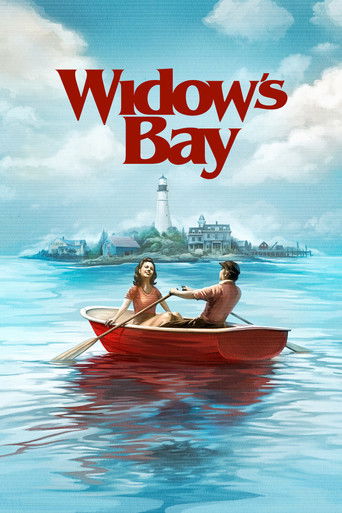
The story of the night is a series nobody was talking about a year ago. “Widow's Bay” premiered on Apple TV on 29 April, to excellent reviews and no noise, and five months later it has taken fourteen Emmys across the technical ceremonies and the main show, the most any comedy has ever won in a single year. It is also a horror series: a New England island under a centuries-old curse, with creatures and deaths and an outsider —Matthew Rhys— arriving somewhere everyone knows something he doesn't. Katie Dippold, the screenwriter of “Ghostbusters” and “The Heat”, wrote it; Hiro Murai, the director of “Atlanta” and of Childish Gambino's videos, directed it. That the Academy rewards it as a comedy says more about the categories than about the show.
A comedy that scares
Because that is the Emmys' old trick, and this year it was in plain sight: “comedy” is, increasingly, anything half an hour long that isn't a drama. “Widow's Bay” won series, directing (Murai, for the pilot “Welcome to Widow's Bay!”), writing (Dippold, for the same), lead actor (Rhys), supporting actor (Stephen Root), supporting actress (Kate O'Flynn, nominated for the first time) and guest actress (Betty Gilpin). Seven of the nine main comedy categories. Left behind were “The Bear”, “Hacks”, “Abbott Elementary”, “Only Murders in the Building”, “Shrinking”, “Nobody Wants This” and “Margo's Got Money Troubles”, which arrived with Elle Fanning, Michelle Pfeiffer and Nick Offerman nominated and went home empty-handed.
The only breach in the wall was opened by Jean Smart, who won her eighth Emmy —the fifth for Deborah Vance in “Hacks”— over Quinta Brunson, Ayo Edebiri, Fanning and Lisa Kudrow, nominated for the return of “The Comeback”. And by Rob Reiner, who took guest actor for “The Bear” in a category that also held Michael J. Fox for “Shrinking”.
Drama, no surprises
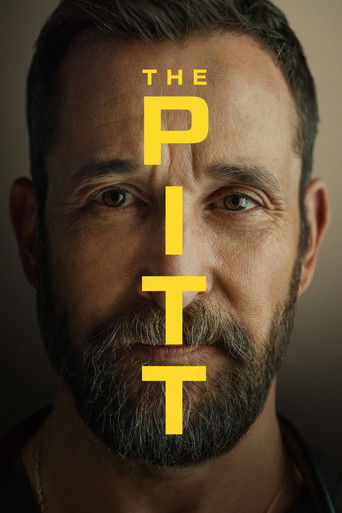
In drama nothing happened that wasn't expected, and that tells a story too. “The Pitt”, HBO Max's hospital drama that had already won last year, arrived with 25 nominations —more than anyone— and repeated as best series. Noah Wyle repeated as lead actor over Gary Oldman (“Slow Horses”), Mark Ruffalo (“Task”), Sterling K. Brown (“Paradise”) and Rufus Sewell (“The Diplomat”). The other finalists for best drama were “The Diplomat”, “The Gilded Age”, “A Knight of the Seven Kingdoms”, “Paradise”, “Pluribus”, “Slow Horses” and “Your Friends & Neighbors”: not a single show among those that ruled three years ago.
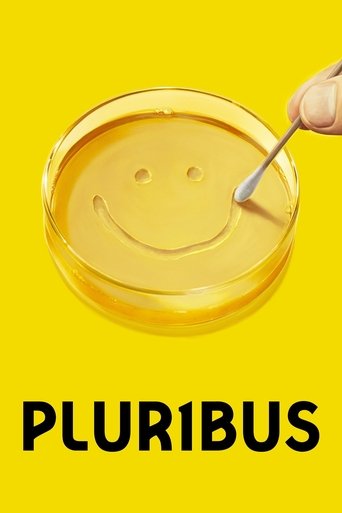
What did change was the actress. Rhea Seehorn won for “Pluribus”, the science-fiction series Vince Gilligan wrote with her in mind after “Better Call Saul”, and she did it over Carrie Coon, Keri Russell, Chase Infiniti (“The Testaments”) and Zendaya, nominated for “Euphoria”. It confirms a career the industry took far too long to notice: Seehorn played six seasons of Kim Wexler without a single Emmy. Gilligan took writing for the episode “We Is Us”; directing went to Saul Metzstein for “Scars”, from “Slow Horses”. In supporting, Allison Janney for “The Diplomat” and Tom Pelphrey for “Task”, who dedicated his award to his fiancée Kaley Cuoco, “very pregnant” in the stalls, in the most cheered speech of the night.
Matthew Rhys's night
Rhys did something no one had done in 78 editions: win, on the same night, the Emmy for lead actor in a comedy (“Widow's Bay”) and in a limited series (“The Beast in Me”, on Netflix, where he plays a property developer suspected in his wife's disappearance, opposite the writer played by Claire Danes). Since he already had the drama award for “The Americans” in 2018, he is also the first person to have won as a lead in all three categories. Two opposite registers, one performer, and a reminder that the Welshman has been one of television's most reliable actors for fifteen years without ever seeming to try.
Limited series: a triangle in St. Louis
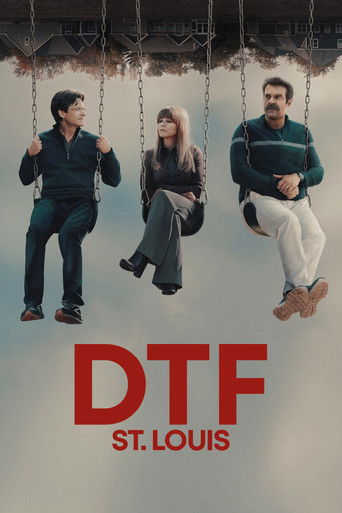
Limited series went to “DTF St. Louis”, the love triangle with a murder that Steven Conrad wrote and directed for HBO, with Jason Bateman as a local news anchor, David Harbour as a sign-language interpreter and Linda Cardellini between them. It won series, directing, writing and both supporting prizes (Harbour and Cardellini), ahead of the second season of “Beef”, “The Beast in Me”, “All Her Fault” and “Love Story”, the miniseries about John F. Kennedy Jr. and Carolyn Bessette. Sally Field won lead actress for “Remarkably Bright Creatures” —which was also best television movie— over Claire Danes, Carey Mulligan, Sarah Snook and Sarah Pidgeon.
Colbert, after the cancellation
And then there is “The Late Show with Stephen Colbert”, which won best variety series after CBS cancelled it and after it aired its last episode in May. The Academy also rewarded the directing of that final episode. An award for a show that no longer exists is, depending on how you look at it, a tribute or a rebuke, and probably both: the room applauded Colbert the way you applaud someone leaving, not someone winning. “The Traitors” repeated as competition series and Alan Cumming as host; the live special was Bad Bunny's Super Bowl halftime show, and the pre-recorded one the return of “The Muppet Show”.
The ceremony
It was hosted by Mariska Hargitay, the first woman to do so since Jane Lynch in 2011 and the first non-comedian since Angela Lansbury in 1993. She opened with a musical number set to “I Love Rock 'n' Roll” and with a line the room laughed at: that she was proud to be the first woman to host in fifteen years, and that “imagine, for fifteen years Amy and Tina said no”. The best came at the end, when she parodied Nicole Kidman's famous AMC cinemas advert and Kidman protested from the stalls —“that's my bit!”— only for Hargitay to tell her to zip it, “movie lady, it's TV's turn tonight”. The worst was the clock: the show finished early and the last presenters had to stall on stage, a rare thing at an awards show famous for the opposite.
Michael J. Fox received the Bob Hope Humanitarian Award for three decades of work against Parkinson's. It was, by some distance, the moment the Peacock Theater stood up with the least protocol. The audience, on the other hand, set another record, and not a good one: 5.9 million viewers on NBC, the lowest in the history of the ceremony.
What the spread of prizes says
Apple TV ended the season as the most awarded platform, with 28 Emmys counting the technical ceremonies. Six years ago it launched with a handful of shows; today it takes comedy, drama actress and drama writing, and the record of the night. HBO keeps the prestige —drama and limited series, the two categories that weigh most— and Netflix, which spends more than anyone, once again leaves with less than it hoped for: its big bets (“The Beast in Me”, “Beef”, “Nobody Wants This”) stayed at nominations, save for Rhys's Emmy.
From here, an archivist's observation: five of this year's big prizes went to series that did not exist two years ago, and the most awarded comedy in Emmy history, counted by statuettes, is one season old. The television that gets rewarded renews itself faster than it used to, and the television people watch live —the ceremony itself— less and less. For anyone keeping a catalogue, the first is a pleasant problem to have. The second is a warning.
In pictures
Widow's Bay
The Pitt
Pluribus
DTF St. Louis
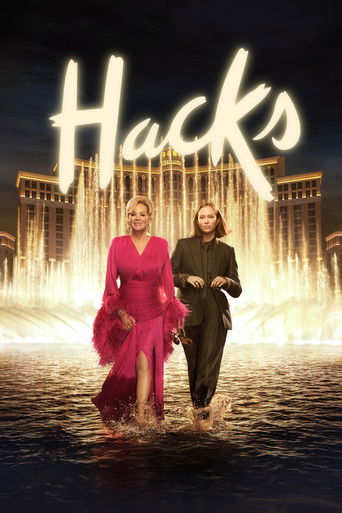
Hacks

The Beast in Me
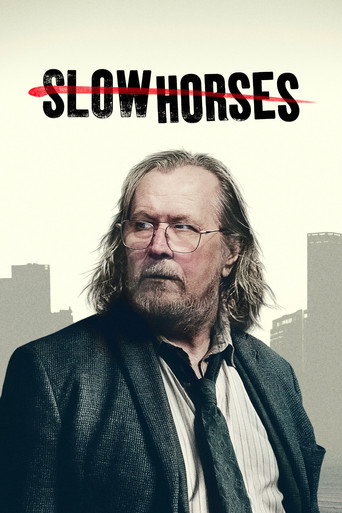
Slow Horses

Task
Sources
More articles
- Article · Industry Why A24 films take so long to arrive (and why some never do)
- Article · Industry The window: how many days a film now spends before leaving cinemas
- Article · Releases “Dune: Part Three” arrives in December, adapting the book that takes the hero apart
- Article · Awards How the Oscar for Best International Feature really works
- Article · Rights What enters the public domain on 1 January 2027 (and why Spain works differently)
- Article · Anniversary “Rocky” turns fifty: the film an out-of-work actor refused to sell
- Article · Archive The cinema that no longer exists: why most silent film has been lost
- Article · Archive What a film archive actually does (and why restoring is not improving)
- Article · History Why Spain dubs: a 1941 decree and a married couple turned into siblings
- Article · Industry What vanishes from platforms: when a film stops existing for tax reasons
- Article · Archive The director’s cut: from repairing damage to selling the same film twice
- Article · Festivals San Sebastián 2026: the jury rewards a farewell and the audience votes for Gaza and for Lorca
- Article · Awards “La bola negra” will go to the Oscars for Spain: what Los Javis are taking to Hollywood, and what they still have to win
- Article · Profile Robert Pattinson's year: four releases, a Homeric villain and the Batman shooting in between