“Dune: Part Three” arrives in December, adapting the book that takes the hero apart
On 18 December, Denis Villeneuve closes the trilogy with “Dune Messiah”, the novel in which Frank Herbert set about demolishing what his readers had celebrated. It is the big film of the year’s end and, quite possibly, the most uncomfortable thing opening this Christmas.
18 Dec
1969
$714M
6
3
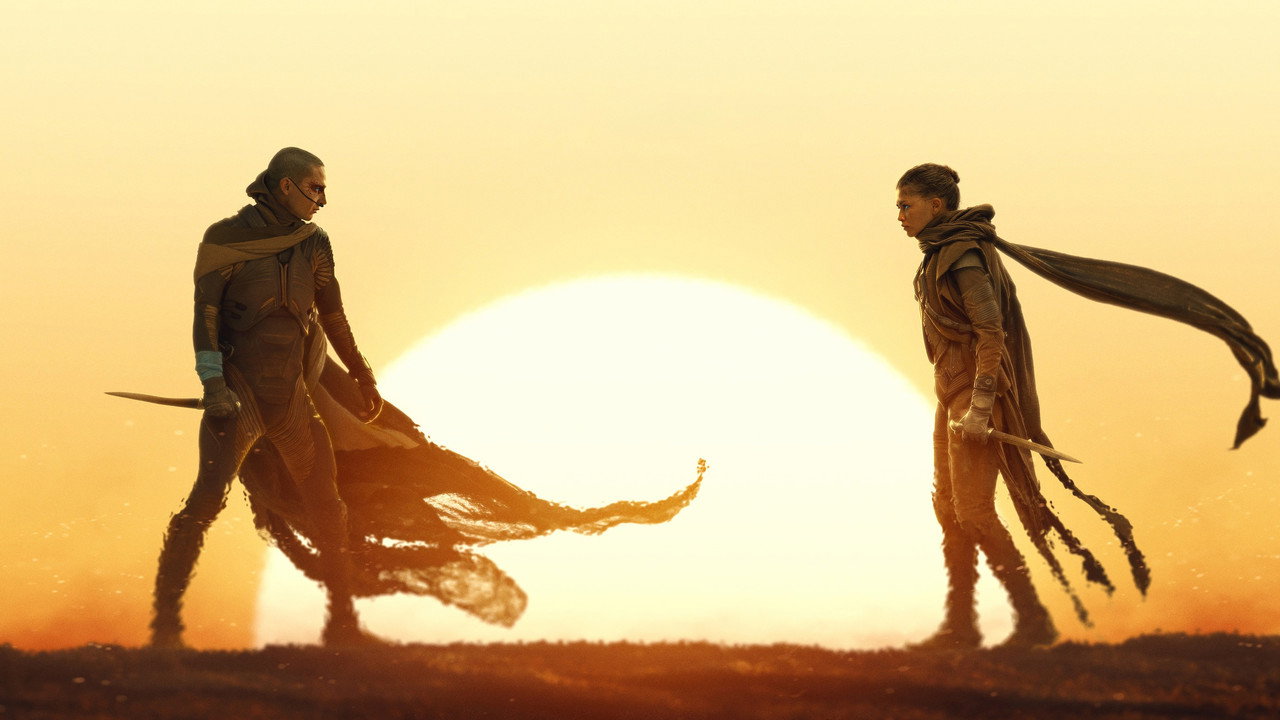
Trilogies usually end with a coronation. This one does not. “Dune Messiah”, the 1969 novel this third film adapts, begins twelve years after the last one ended, with Paul Atreides already emperor and a holy war waged in his name that has cost billions of lives. Herbert wrote it, essentially, because it bothered him that half the world had read “Dune” as a heroic epic. It is the sequel as a correction of a misreading.
What you need to know to understand the bet
The first part (2021) took six technical Oscars and revived an adaptation that had been cursed for decades. The second (2024) made more than seven hundred million dollars worldwide and was, on top of that, a critical success: the kind of enormous film liked by people who do not usually defend enormous films.
On top of that success, the studio now releases the part that tells the audience it was wrong. The script is by Villeneuve himself with Brian K. Vaughan, a comics writer —“Y: The Last Man”, “Saga”— who knows his way around endings that make people uncomfortable. Timothée Chalamet and Zendaya return, and Robert Pattinson comes in as Scytale, the Face Dancer of the Bene Tleilax: a shapeshifter who is the centrepiece of the conspiracy against the emperor.
Why it matters beyond the saga
Because it is one of the very few 2026 films meeting the three conditions the industry says it misses: studio budget, recognisable author and full houses. In a year when most of the big money went to safe sequels, “Dune” is the exception proving you can still make auteur cinema with two hundred million dollars.
Villeneuve has said several times that he sees the three films as a closed block and has no intention of continuing with the rest of the novels, which are many and increasingly strange. If he keeps his word, 18 December does not just open a film: it closes a seven-year project.
What to watch for
Two things. First, the format: the previous two were shot for the big screen and the difference between IMAX and a laptop is, here, almost a difference of work. Second, the tone: if the film really dares to follow the book, the audience that came out of Part Two euphoric will come out of this one in silence. And that silence would be the sign that the adaptation worked.
Dates and figures checked on 20 October 2026; release dates can move.
Films in this article
More articles
- Article · Industry Why A24 films take so long to arrive (and why some never do)
- Article · Industry The window: how many days a film now spends before leaving cinemas
- Article · Awards How the Oscar for Best International Feature really works
- Article · Rights What enters the public domain on 1 January 2027 (and why Spain works differently)
- Article · Anniversary “Rocky” turns fifty: the film an out-of-work actor refused to sell
- Article · Archive The cinema that no longer exists: why most silent film has been lost
- Article · Archive What a film archive actually does (and why restoring is not improving)
- Article · History Why Spain dubs: a 1941 decree and a married couple turned into siblings
- Article · Industry What vanishes from platforms: when a film stops existing for tax reasons
- Article · Archive The director’s cut: from repairing damage to selling the same film twice
- Article · Festivals San Sebastián 2026: the jury rewards a farewell and the audience votes for Gaza and for Lorca
- Article · Awards “La bola negra” will go to the Oscars for Spain: what Los Javis are taking to Hollywood, and what they still have to win
- Article · Profile Robert Pattinson's year: four releases, a Homeric villain and the Batman shooting in between
- Article · Television Emmys 2026: Apple takes the night, comedy is no longer comedy and Colbert bows out with a prize