Why Spain dubs: a 1941 decree and a married couple turned into siblings
The Spanish habit of watching dubbed films was not born of public taste: it was born of a decree by Franco’s regime banning the screening of films in any other language. Out of it came a huge industry, a school of voice actors admired abroad, and a form of censorship that today reads as a joke.
1941
1953
1930s
VOSE
2

There is a comfortable explanation —“Spain dubs because audiences like it”— and a true one, which comes earlier and is less pleasant. On 23 April 1941, a decree of the Ministry of Industry and Trade banned the screening of films not spoken in Spanish, and required dubbing to be done in studios on national soil with Spanish staff. It was not an original idea: it copied fascist Italy, which had been doing the same for a decade.
What it was for
Three things at once. First, protecting the language in the most nationalist sense of the term. Second, protecting the domestic industry by creating a toll: for years, permission to dub a foreign film was handed out through dubbing licences granted to whoever produced Spanish films, so importing American hits meant financing national ones. And third, the decisive one: dubbing is the finest instrument of censorship there is.
Cutting a scene shows. Changing a line does not. With a dubbing booth you can rewrite an entire film without the audience suspecting a thing, and that is exactly what was done for decades with any dialogue that brushed against sex, religion or politics.
The case that sums it up
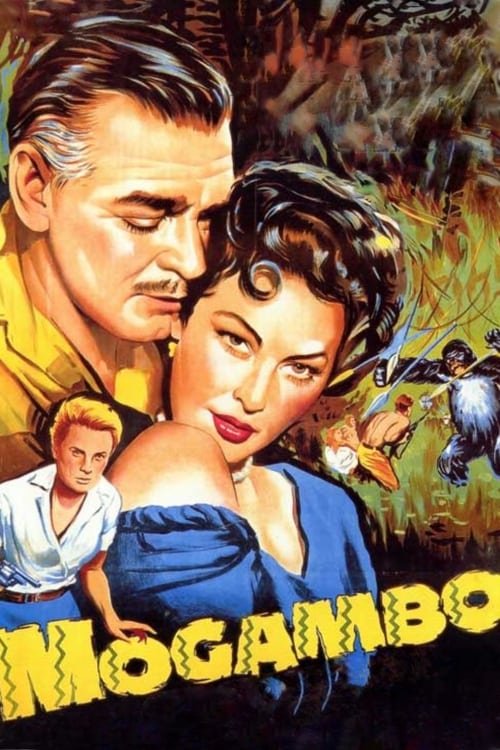
The canonical example is “Mogambo” (1953), by John Ford. In the original, Grace Kelly plays a married woman who falls for Clark Gable: adultery, which Spanish censorship did not allow. The dubbing solution was to turn the married couple into siblings. The result is that the intimate scenes between them, still there, now suggested incest. To avoid one sin a worse one slipped in, and the film opened like that.
It is funny told today and it explains the mechanism: when an industry is set up to rewrite dialogue, rewriting stops being exceptional. There was no need to ban “Mogambo”; dubbing it was enough.
What is left of it
Two things, and they are worth separating. One is a dubbing industry with real craft: voice actors who are often better performers than the European average and whom audiences recognise by timbre before face. The other is a habit: Spain is still, along with Italy, Germany and France, one of the countries where the dubbed version rules, while in half of Europe —Portugal, the Netherlands, the Nordics— subtitling is the norm.
What changed the equation was not a law but a button. Platforms put the original audio one click away, series normalised it, and today there is a whole generation watching with subtitles by default and another with no intention of changing. Neither has to convince the other: for the first time since 1941, you can choose. In this archive, each film’s page states its original language, which is the information that choice needs. Checked on 20 October 2026.
Films in this article
Sources
More articles
- Article · Industry Why A24 films take so long to arrive (and why some never do)
- Article · Industry The window: how many days a film now spends before leaving cinemas
- Article · Releases “Dune: Part Three” arrives in December, adapting the book that takes the hero apart
- Article · Awards How the Oscar for Best International Feature really works
- Article · Rights What enters the public domain on 1 January 2027 (and why Spain works differently)
- Article · Anniversary “Rocky” turns fifty: the film an out-of-work actor refused to sell
- Article · Archive The cinema that no longer exists: why most silent film has been lost
- Article · Archive What a film archive actually does (and why restoring is not improving)
- Article · Industry What vanishes from platforms: when a film stops existing for tax reasons
- Article · Archive The director’s cut: from repairing damage to selling the same film twice
- Article · Festivals San Sebastián 2026: the jury rewards a farewell and the audience votes for Gaza and for Lorca
- Article · Awards “La bola negra” will go to the Oscars for Spain: what Los Javis are taking to Hollywood, and what they still have to win
- Article · Profile Robert Pattinson's year: four releases, a Homeric villain and the Batman shooting in between
- Article · Television Emmys 2026: Apple takes the night, comedy is no longer comedy and Colbert bows out with a prize