- Born
- Died
- Place
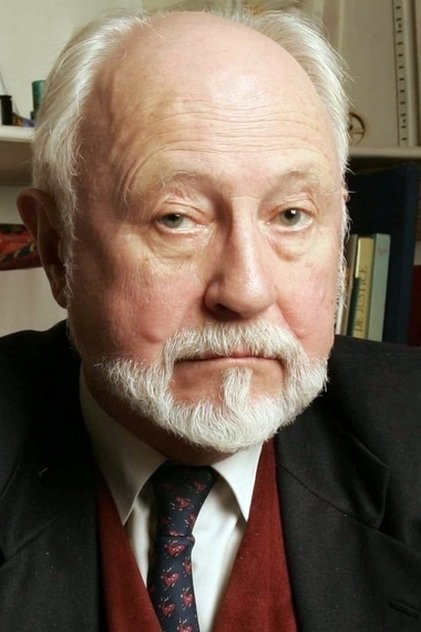
Vladimir Volkoff
Vladimir Volkoff (7 November 1932 – 14 September 2005) was a French writer of Russian extraction. He produced both literary works for adults and spy novels for young readers under the pseudonym Lieutenant X. His works are characterised by themes of the Cold War, intelligence and manipulation, but also by metaphysical and spiritual elements.
Of Russian descent with Tatar roots on his paternal side, Volkoff was born in Paris, the son of a Russian émigré who earned his living in France washing cars. Vladimir grew up with his family's memories of the lost motherland and loyalty to their new homeland. He was a great grandnephew of the composer Piotr Ilyich Tchaikovsky.
After studying at the Sorbonne in Paris and the university of Liège, Volkoff taught English at Amiens from 1955-57. He served as an intelligence officer in the French army during the Algerian War, where he learnt how war is fought as much in the shadows and the embassies as in the open air of the battlefield.
After his demobilisation, Volkoff travelled to the United States to teach French and Russian literature. He worked as a translator (1963–65), and a professor of French and Russian from 1966-77. Fascinated by the powerful country teeming with contradictions, he remained there for almost three decades, returning to France in 1992. Among his "American" works are L'Agent triple (1962), Métro pour l'enfer (1963), Les Mousquetaires de la République (1964) and Vers une métrique française (1977).
Throughout the 1970s under his pseudonym Lieutenant X, Volkoff published stories for teenagers in the Langelot series of Hachette's Bibliothèque verte imprint, featuring the adventures of the eponymous hero, a young French secret agent. In these works Volkoff showed his taste for romantic intrigues and plot twists, and his profound understanding of the balance of forces prevailing in the world.
In the later 1970s, with the standoff between East and West a constant reality, Volkoff's writings analyzed the ideological combat between two opposing conceptions of the world and of freedom with a solid geopolitical background.