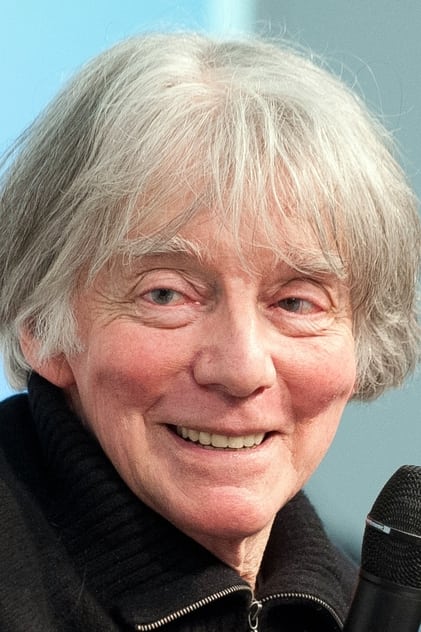
- Nacemento
- Falecemento
- Lugar
André Glucksmann
André Glucksmann (19 June 1937 – 10 November 2015) was a French philosopher, activist and writer. He was a leading figure of the new philosophers.
Glucksmann began his career as a Marxist, but went on to reject communism in the popular book La Cuisinière et le Mangeur d'Hommes (1975), and later became an outspoken critic of the Soviet Union and post-Soviet Russian foreign policy. He was a strong supporter of human rights. In later years he opposed the claim that Islamic terrorism is the product of the clash of civilizations between Islam and the West.
André Glucksmann was born in 1937 in Boulogne-Billancourt, the son of Ashkenazi Jewish parents from Austria-Hungary. His father was from Czernowitz in northern Bukovina, which later became part of Romania and is now in Ukraine, and his mother from Prague, which later became the capital of Czechoslovakia.
Glucksmann's father was killed in World War II, and his mother and sister were active in the French Resistance. The family "narrowly escaped deportation to the camps" during the Holocaust, which influenced Glucksmann's developing ideas of "the state as the ultimate source of barbarism".
He studied at the Lycée la Martinière in Lyon, and later enrolled at École normale supérieure de Saint-Cloud. His first book, Le Discours de la Guerre, was published in 1968.
In 1975 he published the anti-Marxist book La Cuisinière et le Mangeur d'Hommes - subtitled Réflexions sur l'État, le marxisme et les camps de concentration, in which he argued that Marxism leads inevitably to totalitarianism, tracing parallels between the crimes of Nazism and Communism. In his next book Les maitres penseurs, published in 1977 and translated into English as Master Thinkers (Harper & Row, 1980), he traced the intellectual justification for totalitarianism back to the ideas articulated by various German philosophers such as Fichte, Hegel, Marx, and Nietzsche. In the years of the Vietnam War, Glucksmann rose to national prominence after expressing his support for Vietnamese boat people. He began working with Bernard-Henri Lévy criticizing Communism. Both had formerly been well known Marxists. Shortly afterwards they became known, along with others of their generation who rejected Marxism, as New Philosophers, a term coined by Lévy.