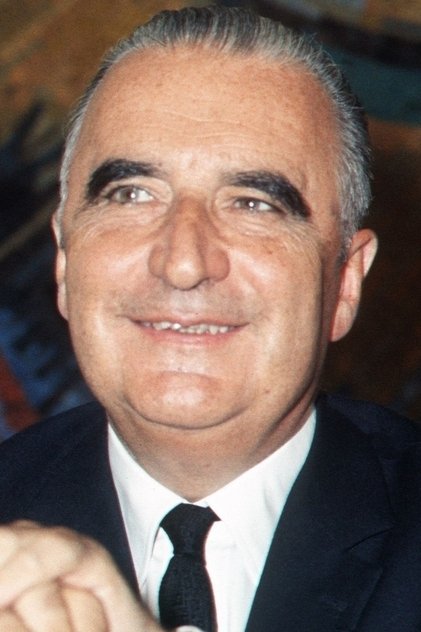
- Nacemento
- Falecemento
- Lugar
Georges Pompidou
Georges Jean Raymond Pompidou (5 July 1911 – 2 April 1974) was a French politician who served as President of France from 1969 until his death in 1974. He previously was Prime Minister of France of President Charles de Gaulle from 1962 to 1968—the longest tenure in the position's history. He had long been a top aide to President Charles de Gaulle.
In the context of the strong growth of the last years of the Trente Glorieuses, Pompidou continued De Gaulle's policy of modernisation, symbolised by the presidential use of the Concorde, the creation of large industrial groups and the launch of the high-speed train project (TGV). The State invested heavily in the automobile, agri-food, steel, telecommunications, nuclear and aerospace sectors. It also created the minimum wage (SMIC) and the Ministry of the Environment.
His foreign policy, pragmatic although in keeping with the Gaullist principle of French independence, was marked by a warming of relations with Nixon's United States, as well as by close relations with Brezhnev's USSR, the launch of the Snake in the tunnel and the relaunching of European construction by the entry of the United Kingdom into the EEC, an idea which his predecessor at the Élysée Palace had opposed.
Pompidou died in office in 1974 of Waldenström's disease, a rare form of blood cancer. His presidency is generally held in high esteem by French political commentators.
A man of letters, he belongs to a long line of French statesmen with an excellent writing style. His "Anthology of French Poetry" is still a reference today and is part of the school curriculum. While he was passionate about contemporary art, his name remains known worldwide for the Centre national d'art et de culture Georges-Pompidou, which he initiated, which was inaugurated in 1977 and which subsequently spread the name with its branches in Metz (France), Malaga (Spain), Brussels (Belgium) and Shanghai (China). A Georges Pompidou Museum is also dedicated to him in his home town.
The family of Georges Pompidou was of very modest origins: he was the grandson of farmers of modest means in Cantal on both his father's and his mother's side. His parents were teachers. Thus his case is often cited as a typical example of social mobility in the Third Republic, thanks to public schooling.
Como intérprete

Bajo las banderas, el sol
« Le Chagrin et la Pitié » : La France de Vichy dynamitée
Madame Soleil, la femme qui était supposée savoir
L'Âge d'or de la pub

Cent jours

TGV, génie français du rail
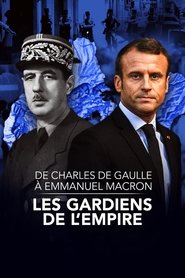
De Charles de Gaulle à Emmanuel Macron, les gardiens de l'empire
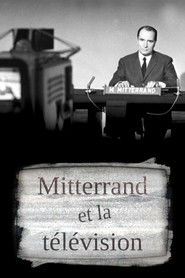
Mitterrand et la télé
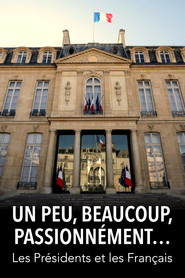
Un peu, beaucoup, passionnément... Les Présidents et les Français
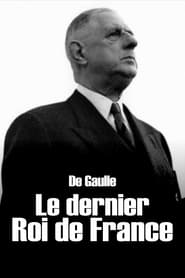
De Gaulle, le dernier roi de France
Stupor Mundi: Livre 1, Rituel de décapitation du pape
Bokassa Ier, empereur de Françafrique

Una chica de verdad

La Carapate

El fondo del aire es rojo

La sociedad del espectáculo

Le Désirable et le Sublime
Mai 68, dix semaines qui ébranlèrent la France