- Jaiotza
- Heriotza
- Lekua
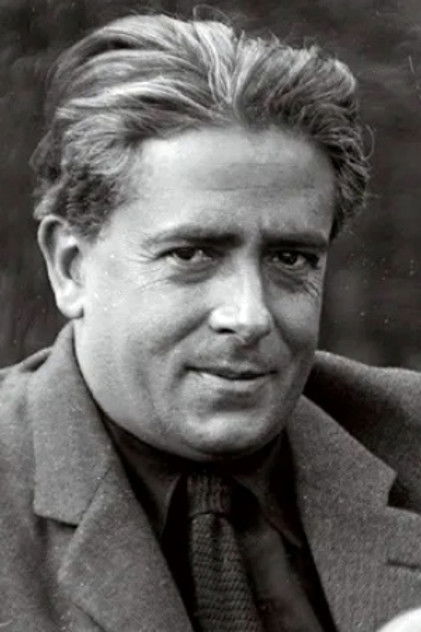
Francis Picabia
Francis Picabia (born Francis-Marie Martinez de Picabia; 22 January 1879 – 30 November 1953) was a French avant-garde painter, poet and typographist. After experimenting with Impressionism and Pointillism, Picabia became associated with Cubism. His highly abstract planar compositions were colourful and rich in contrasts. He was one of the early major figures of the Dada movement in the United States and in France. He was later briefly associated with Surrealism, but would soon turn his back on the art establishment.
Francis Picabia was born in Paris of a French mother and a Cuban father of Spanish descent. Some sources would have his father as of aristocratic Spanish descent, whereas others consider him of non-aristocratic Spanish descent, from the region of Galicia. His birth year of 1879 coincided with the Spanish-Cuban Little War; and though Picabia was born in Paris, his father was involved in Cuban-French relations and would later serve as attaché at the Cuban legation in Paris (see the Treaty of 1898). The family ties to Cuba would be important in Picabia's life later on.
The family was affluent, but not without tragedy. Picabia's mother died of tuberculosis when he was seven and her mother died soon after. He was raised by his father.
Picabia's artistic ability was apparent from his youth. In 1894, he copied a collection of Spanish paintings that belonged to his grandfather, switching the copies for the originals and selling the originals to finance his stamp collection.
During the late 1890s, Picabia began to study art under Fernand Cormon and others at École des Arts Decoratifs, Cormon's academy at 104 boulevard de Clichy, where Van Gogh and Toulouse-Lautrec had also studied. He studied under Fernand Cormon, Ferdinand Humbert, and Albert Charles Wallet for two years. From the age of twenty Picabia lived by painting. Subsequently, he inherited money from his mother, making him financially independent.
Early in his career, from 1903 to 1908, Picabia was influenced by the Impressionist paintings of Alfred Sisley. His subject matter included small churches, lanes, roofs of Paris, riverbanks, wash houses, and barges. This led critics to question his originality, saying that he copied Sisley, that his cathedrals looked like Monet cathedrals, or that he painted like Signac.