- Nacimiento
- Fallecimiento
- Lugar
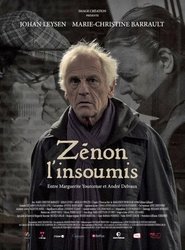
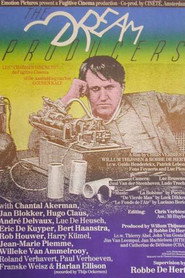
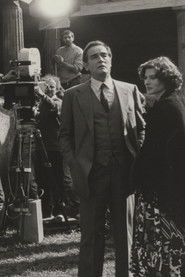
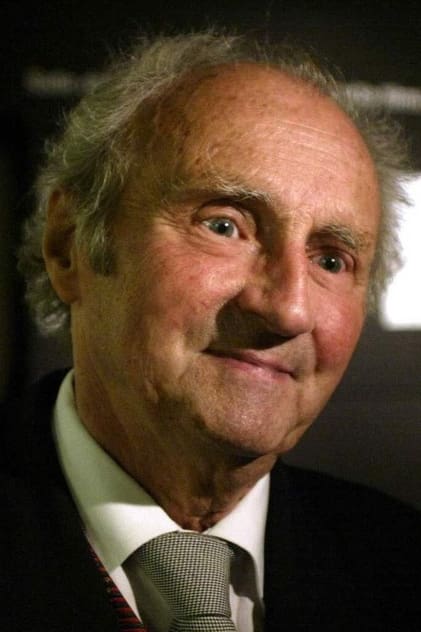
André Delvaux
André Albert Auguste Delvaux (21 March 1926 – 4 October 2002) was a Belgian film director. He co-founded the film school INSAS in 1962 and is regarded as the founder of the Belgian national cinema. Adapting works by writers such as Johan Daisne, Julien Gracq and Marguerite Yourcenar, he received international attention for directing magic realist films.
Delvaux received the Louis Delluc Prize for Rendezvous at Bray (1971) and the André Cavens Award for Woman Between Wolf and Dog (1979) and The Abyss (1988). The king of Belgium made him a baron in 1996. The Académie André Delvaux is named after him and he posthumously received the first Honorary Magritte Award in 2011.
André Albert Auguste Delvaux was born in Heverlee, Belgium, on 21 March 1926. He studied piano at the Royal Conservatory of Brussels and worked as a silent film pianist at the Belgian cinématheque in his early 20s. He studied law and took a degree in German philology at the Free University of Brussels, after which he worked as a teacher.
Delvaux's filmmaking career started in 1954 when he began to make television documentaries about film directors for the broadcaster RTB. Notably, he made a four-part series about Federico Fellini in 1960. In 1959 he co-directed a short fiction film with Jean Brismée, La Planète fauve. In 1962 he co-founded the film school INSAS in Brussels and became the director of its directing department. From that point cinema was his primary occupation.
Delvaux's first two feature films were based on books by Johan Daisne.
Delvaux received international attention for his first feature film, The Man Who Had His Hair Cut Short (1965), which is based on Johan Daisne's novel with the same title. It was followed by another Daisne adaptation, One Night... A Train, in 1968. His first colour film, it shares several elements with the previous film: an uncomfortable teacher, a tragic ending and a confrontation between love and death. Rendezvous at Bray (1971), loosely based Julien Gracq's novella King Cophetua, is set during World War I and places great emphasis on atmosphere. The film stars Mathieu Carrière, Roger Van Hool, Bulle Ogier and Anna Karina, and became a turning point in Delvaux's career, because its critical success allowed him to choose his subjects more freely.
Como dirección
1001 Films
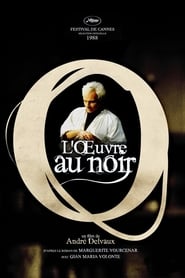
L'œuvre au noir
La Fanfare a 100 ans
Babel opéra, ou la répétition de Don Juan de Wolfgang Amadeus Mozart
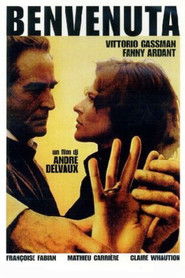
Benvenuta
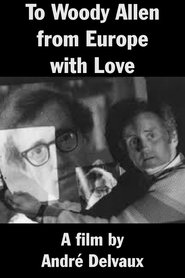
To Woody Allen from Europe with Love
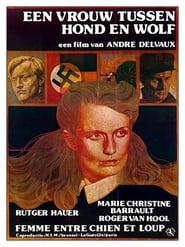
Een vrouw tussen hond en wolf

Met Dieric Bouts
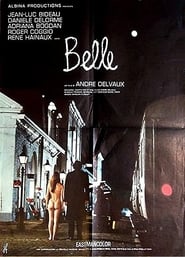
Belle

Cita en Bray
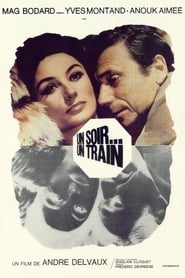
Una noche, un tren
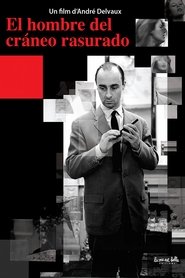
El hombre del cráneo rasurado
Achter het scherm: Les demoiselles de Rochefort
Behind the screens : Jacques Demy’s Les demoiselles de Rochefort - Les décors
Le temps des écoliers